Foster Care Institute Dr. John DeGarmo
  • Home
  • About
    • Motivational Keynote Speaker Topics >
      • Motivational Speaker
      • Inspirational Speaker
      • Foster Care Speaker
      • Fundraising Keynote
    • In The Media
    • Articles
    • Blog
    • At Home Virtual Foster Parent Intake and Orientation >
      • Intake and Orientation Book
      • Session 1: What is Foster Care?
      • Session 1: Birth Children and Foster Children
      • Birth Parents and You Quiz
      • Session 1: Anger Management
      • Session 2: Anxiety and Disorders
      • Quiz: Anxieties and Disorders
      • Session 2: Birth Parents and You
      • Quiz: Child Development
      • Session 2: Child Development Part I
      • Session 3: Child Development Part II
      • Session 3: Trauma Informed Parenting
      • Trauma Informed Quiz
      • Session 3: Caseworkers and Foster Parents
      • Quiz: Caseworker
      • Session 4: Burnout and Stress
      • Burnout and Stress Quiz
      • Session 4: Documentation
      • Quiz: Documentation
      • Session 4: Loss and Grief
      • Quiz: Loss and Grief
      • Session 5: Placement
      • Quiz: Placement
      • Session 5: Protecting Yourself as a Foster Parent
      • Session 5: Visitations
      • Visitations Quiz
    • Foster Parent Recruitment >
      • Foster Parent Recruitment Book
      • Recruitment Webinar: Intro
      • Recruitment Webinar I
      • Recruitment Webinar II
      • Recruitment Webinar III
      • Recruitment Webinar IV
      • Recruitment Webinar V
      • Recruitment Webinar VI
      • Recruitment Webinar VII
      • Recruitment Webinar VIII
    • Consultant
    • Foster Care 101 Videos/Radio
    • Foster Care Success Coaching
    • Foster Parent Coach
    • Author Success Coach
    • How To Be A Paid Speaker
    • Testimonials
  • Contact
  • Foster Care Training
  • Store
    • The Foster Care Institute Library of Online Training Webinars
  • Training Webinars
    • Webinar: Accountability vs. Accusations
    • Webinar: ADHD Part I
    • Webinar: ADHD Part II
    • Webinar Aging Out Part I
    • Webinar Aging Out Part II
    • Webinar: Anger Management
    • Webinar Anxieties and Disorders
    • Webinar: Attachment
    • Webinar: Autism
    • Webinar: Bedwetting
    • Webinar Birth Children and Adoptive Foster Children
    • Webinar Birth Parents and You
    • Webinar: Building Self Confidence
    • Webinar: Bullying Part I
    • Webinar: Bullying Part II
    • Webinar Burnout and Stress
    • Webinar: Case Workers and Foster Parents CW Version
    • Webinar: Case Workers Foster Parents Foster Parent Version
    • Webinar Child Development I
    • Child Development II Quiz
    • Webinar Child Development II
    • Webinar Child Sex Trafficking
    • Webinar Compassion Fatigue
    • Webinar Discipline and Children in Foster Care
    • Webinar Documentation
    • Webinar Eating Disorders
    • Webinar: Emphatic Listening
    • Webinar: Establishing Trust
    • Webinar: FASD Part I
    • Webinar: FASD Part II
    • Webinar: Fire Starting
    • Webinar: Grief/Loss for Children
    • Webinar Grief and Loss
    • Webinar: Helping Foster Children in School
    • Webinar: Home Safety
    • Webinar How to Prepare for Foster Child
    • Webinar: Illness Anxiety
    • Webinar Just For Dads
    • Webinar: Kinship Care
    • Webinar Knowing the Terms
    • Webinar: Lice! Prevention and Treatment
    • Webinar Life Books
    • Webinar: Managing Stress
    • Webinar: Mandated Reporting
    • Webinar Marriage/Foster Care Part I
    • Webinar Marriage Foster Care Part II
    • Webinar: Mental Health Issues
    • Webinar: Neglect
    • Webinar: Non Compliance
    • Webinar: Normalcy
    • Webinar: Oppositional Defiant Disorder
    • Webinar: Parenting Troubled Teens
    • Webinar: Positive Parenting
    • Webinar Post Adoption Depression
    • Webinar Power of Prayer
    • Webinar Protecting Yourself as a Foster Parent
    • Webinar: Reactive Attachment Disorder
    • Webinar: Respite Care
    • Webinar: Rights of Children in Foster Care
    • Webinar: Rights and Responsibilities
    • Webinar: Running Away
    • Webinar: Saying Goodbye to Children in Foster Care
    • Webinar Schools Part 1
    • Webinar Schools Part II
    • Webinar: Self Harm
    • Webinar Sexual Predators/Sexting
    • Webinar Sleep Anxieties
    • Webinar Social Media Safety
    • Webinar: Stealing
    • Webinar The Holidays
    • Webinar: Transracial Parenting Part I
    • Webinar: Transracial Parenting Part II
    • Webinar Trauma and Stress
    • Webinar: Trauma Informed Parenting I
    • Webinar: Trauma Informed Parenting II
    • Webinar Visitations
    • Webinar: Why Children Bite
    • Webinar Why Children Lie
    • Webinar What if he is Not Adopted
    • Webinar: What is Foster Care
  • CCYA RBWO Training
    • ADHD Part I RBW
    • ADHD Part II RBW
    • Aging Out RBWO Training
    • Anger Management RBWO
    • Bullying RBWO
    • Caseworkers and Staff RBWO
    • Challenges of School RBWO Training
    • Compassion Fatigue RBW
    • Eating Disorders-RBW
    • Emphatic Listening RBWO Training
    • Grief and Loss RBWO
    • Illness Anxiety RBWO
    • Managing Stress
    • Mandated Reporting RBWO Training
    • Normalcy RBWO
    • R.A.D. RBWO Training
    • Running Away RBW
    • Self Harm RBWO
    • Sleep Anxieties RBWO Training
    • Social Media Safety RBWO Training
    • The Holidays-RBW
    • Trauma Part I RBW
    • Trauma Part II RBW
    • Visitations RBWO
  • Paid Member Benefits Page
    • Certificate: Accountability
    • Certificate: ADHD Part I
    • Certificate ADHD Part II
    • Certificate Aging Out I
    • Certificate Aging Out II
    • Certificate Anger Management
    • Certificate Anxieties Disorders
    • Certificate: Attachment
    • Certificate: Autism
    • Certificate: Bedwetting
    • Certificate Birth Children
    • Certificate Birth Family
    • Certificate Biting
    • Certificate-Building Self Esteem
    • Certificate Bullying Part I
    • Certificate Bullying Part II
    • Certificate Burn Out/Stress
    • Certificate Caseworker/Foster Parents CW Version
    • Certificate Case Workers Foster Parents FP Verssion
    • Certificate Child Development I
    • Certificate Child Development II
    • Certificate Child Sex Trafficking
    • Certificate Compassion Fatigue
    • Certificate Discipline and Foster Care
    • Certificate Documentation
    • Certificate Eating Disorders
    • Certificate: Emphatic Listening
    • Certificate: Establishing Trust
    • Certificate: FASD Part I
    • Certificate: FASD Part II
    • Certificate Fire Starting
    • Certificate Helping Foster Children in School
    • Certificate Home Safety
    • Certificate: Illness Anxiety
    • Certificate Just For Dads
    • Certificate: Kinship Care
    • Certificate Knowing the Terms
    • Certificate: Lice! Prevention and Treatment
    • Certificate Life Books
    • Certificate Loss/Grief
    • Certificate: Managing Stress
    • Certificate: Mandated Reporting
    • Certificate Marriage II
    • Certificate Marriage I
    • Certificate: Mental Health Issues
    • Certificate: Neglect
    • Certificate: Non Compliance
    • Certificate: Normalcy
    • Certificate: ODD
    • Certificate Online Dangers
    • Certificate: Parenting Troubled Teens
    • Certificate Placement
    • Certificate: Positive Parenting
    • Certificate Post Adoption Depression
    • Certificate Power of Prayer
    • Certificate Protecting Yourself as a Foster Parent
    • Certificate Reactive Attachment Disorder
    • Certificate Respite Care
    • Certificate: Rights for Children
    • Certificate Rights and Responsibilities
    • Certificate Running Away
    • Certificate: Saying Goodbye
    • Certificate Schools I
    • Certificate Schools II
    • Certificate: Self Harm
    • Certificate Sexting
    • Certificate Sleep Anxieties
    • Certificate Stealing
    • Certificate The Holidays
    • Certificate: Transracial Parenting Part I
    • Certificate: Transracial Parenting Part II
    • Certificate Trauma
    • Certificate: Trauma Informed Parenting I
    • Certificate : Trauma Informed Parenting II
    • Certificate Visitation
    • Certificate What if Not Adopted
    • Certificate: What is Foster Care
    • Certificate Why Children Lie
  • Documentation Paperwork
    • Documentation Downloadable Paperwork
  • How to be a Foster Parent
  • Cancel Subscription

The Reason Children in Foster Care are Failing in School

7/23/2026

3 Comments

 
Picture
When I first began teaching, and before I was a foster parent, I knew very little about foster care, or about foster children. To be sure, what I thought I knew about children in foster care, and about the foster care system, was as far from the truth as possible. Like most of the general public, I had false ideas and beliefs about foster children, and much of it was negative, I am afraid to say. This was due mainly to the false stereotypes that abound in society. As a result, I was not prepared to meet the many needs that the students from foster homes so desperately needed while in my classroom. Even further, in all my years of college, and of additional instructional workshops, I did not have the training required to best help foster children as they struggled in my classroom, and neither did my colleagues.

After a few children from foster care had passed through my own home, I began to appreciate the fact that I had to not only adjust my teaching habits for children in crisis, but I also had to become my own children’s advocate at their own schools. I watched my foster children struggle in my fellow teacher’s classrooms, and also was witness to these same teachers as they failed to understand the various emotional challenges the children in my home were going through on a daily basis. To be sure, there were those times when I had to politely intervene on behalf of my foster child. There were also those times when I had to sit across the table from a fellow teacher as we discussed how my foster child’s behavior was interfering in the classroom setting. My desire to better assist both my colleagues and foster children led to my doctoral studies on the subject. I simply wanted to help children in foster care succeed in school, as well as bring awareness about their struggles to our schools.
​

Children in foster care, in general, tend to perform below level in regard to both academic performance and in positive behavior than those students who come from either traditional homes as well as children from economically disadvantaged homes. The majority of children under foster care supervision experience problems in behavior while enrolled in public schools. Those foster children who were taken from homes due to neglect repeatedly suffer from a number of developmental delays. These include poor language and vocabulary development, thus impairing communication skills.

Join the thousands who receive Dr. DeGarmo’s FREE foster care newsletter. Simply fill out the form below.

For many children in foster care, our schools are the last place they want to be. For that foster child who has been taken from his family, from his home, from his friends, and all he knows, and suddenly placed into a strange home late one evening, only to be forced to attend a strange school the following day, it is incredibly traumatic. Foster children often have a difficult time with exhibiting proper school behavior during the school day. For many of the children, school is a constant reminder that they are, indeed, foster children without a true home. The continuous reminder that their peers are living with biological family members while they are not is a difficult reality for them, and can be manifested in several ways. Some foster children simply withdraw and become anti-social, in an attempt to escape their current environment and world they have been thrust into. For many foster children, violent behavior becomes the norm, as they not only act out in a negative and disruptive fashion in the school, but in their foster home, too, prompting yet another move to another foster home and another school (see the book Helping Foster Children in School: A Guide for Foster Parents, Social Workers, and Teachers, (DeGarmo, Jessica Kingsley Publishers 2015).

Since children in foster care are often behind academically, as well as struggle with the fact that they are coming from outside school districts with different expectations, teachers in your child’s school need to be conscious of this fact. Foster children struggle with many personal and emotional issues while in the foster home, and homework is often not the main objective while in the home each evening. Instead, the emotional issues your child faces may take center stage on a particular evening. Teachers need to assign homework with this in mind, being sensitive to their issues. Let your child’s teacher know this, and ask that they cooperate with you on this. Meet with the teachers, the school counselor, and perhaps even an administrator of the school when you enroll your foster child, and explain these concerns to them. Like I was beforehand, it is highly likely that they have not had much experience with foster children, nor the challenges they face.


As a foster parent, you will need to reach out to the teachers, and ask for as much information and updates as possible. It is essential to your child’s success in school that you become actively involved and interested in your child’s school life. Look for ways to volunteer in the school. Encourage your foster child to become active in after school activities. Take an interest in your child’s school work, and make sure it is done to the best of his ability each evening. Help your child study, and praise him when he does well. If you have a young foster child in the early years of school, read to him each evening, or listen to him read to you. Help him with his spelling and writing skills. Quite simply, be your foster child’s advocate with his teachers, and in his school. Without your help, your child from foster care is not going to find success, in any fashion.

As I write this, school is about to begin in my area. I have already met with the teachers of the  children currently living in my home. Fortunately, these teachers have already taught many of the children from foster care who my wife and I have been blessed to have in our home over the years, and these teachers and I have been able to build a healthy working partnership, through both good times and bad. It is only with the combined effort of you, your child’s teachers, and your caseworker, that your foster child has a chance for success in school. You need to lead this charge. You need to be your child’s advocate. Your child is counting on you. Will you let her down?

-Dr. John
The Foster Care Institute

    ​Sign up for FREE Foster Care Newsletter

Submit
Order your personally signed copy of Helping Foster Children in School: A Guide for Foster Parents, Social Workers, and Teachers.  Order HERE.
Picture
3 Comments

Why This Celebrity Actress and Foster Parent Needs Support!

7/5/2026

3 Comments

 
Picture

When I became a foster parent, I had zero support. My parents were upset because they wanted to protect my heart, and while I understand and appreciate the sentiment behind their reasoning, I was also disgusted. I know that’s a harsh word, and I shouldn’t react so viscerally, because I immediately recognized their natural parental instinct to protect me. But still—it was hard not to judge their initial reaction. They were the ones who introduced me to the concept of fostering! It just felt so unfair.

I truly believe that while it’s important to check in with myself in regard to my emotions and stress, it’s also important to note that I am an adult who can process my emotions on a complex level and assess how to best manage my feelings and expectations. So then, it is imperative that I offer my love and emotional coping skills to a child who is helpless and out of control–and to extend that same grace to their biological families to the best of my abilities.

​Sure, some days my heart hurts like hell. When I was fostering, there wasn’t a day that went by that I didn't end up crying a little. But those tears made me more empathetic.  Remember my clenched fist of control analogy from the introduction? Each tear felt like oil loosening my grip on whatever I was trying to control. My heart can heal because I have coping skills, faith, and family and friends who love me. So if my adult-sized heart can take on some of the pain a child in foster care would otherwise have to carry alone, then so be it. But hear me now: you need other foster parents to walk through this fire with you. No one else can relate. No one.
​
My husband’s family was incredibly supportive when they found out we were going to foster. We had a prescheduled trip back east the week after we got Kayden, and I received special permission to travel with him to Virginia and West Virginia. My mom and I had more than a few extremely emotional arguments about “protecting my heart,” but Jason’s family welcomed us with a surprise baby shower. They were so kind. I thought they would be our best support system. And to be fair, they supported us in the best way they knew how. But they couldn’t relate. Which brings me to two stories that cut me to the core. I share these not to throw anyone under the bus (especially not my in-laws, whom I immediately forgave), but to help you set and manage your expectations. Your well-intentioned support system might be completely oblivious to the mental, emotional, physical, and spiritual trials you endure as a foster parent. Other foster parents understand—and you need them in your foster care journey. They will be your lifeline when no one else gets it.

​Kayden and Jeffrey are my sons by adoption. But because of the heartache, advocacy, middle momming—and by knowing there’s going to be a lot of emotional mountains and valleys ahead in regard to my not being their “real” … aka biological mom … (a subject we’ll address in chapter 8)—I honestly feel like I’m more of a mom to them than I am to my two biological kids.   I honestly feel like I’m more of a mom to them than I am to my two biological kids. With this in mind, I’ll dive into the two most heinous things anyone has ever said to me.
​
When I had my daughter Julie—three years after we began fostering Kayden, and after his adoption—one of my sisters-in-law invited me to some secret sisters-in-law group text I hadn’t been part of yet saying, “Welcome to the mom club!” followed by some dumb emojis; I recall them being a bomb (probably because of the way my lower body felt) and a flexing arm. Then the other three chimed in with agreement. As if the past three years of the most agonizing heartache, prayers, stress, endless monitored visitations, reports, hospital visits, being vomited and pooped on too many times to count didn’t qualify. I know they intended to be kind, but it left me gasping for air like I’d been punched in the solar plex. I was crushed. Apparently none of them thought all the sleepless nights, sleep training, diaper changing, potty training, tantrums, drug withdrawals, sicknesses, middle momming, disciplining, teaching, and you know, all those things parents do, didn’t qualify me yet. Plus, Kayden was already adopted. 


Join the thousands who receive Dr. DeGarmo’s FREE foster care newsletter. Simply fill out the form below.
​
​ And on that note, let me just take a quick moment to say that having biological children, while it’s a doozy on your body (and I won’t discredit or diminish that in any way), followed by a seriously bleak fourth trimester no one tells you about, is no walk in the park—but it’s still a heck of a lot easier. I know my bio kids’ medical histories. I know they weren't exposed to domestic violence or drugs in utero. I didn’t have to lose even more sleep worrying about whether or not they’d survive if they went back to a violent and destructive home. I don’t need a stack of court-approved forms to take them to a medical specialist if I felt they needed it. I don’t have to co-parent with someone whose judgment is harmful. I have legal rights. I don’t have to “parent” their parents.  And yet, apparently, procreating is what qualifies you as an “official” mom. That day, I realized just how different the foster parenting journey is.  I’m telling you—the way my sisters-in-law did it was easier. And let me be clear: Their ability to have biological children is not what makes them incredible mothers. They are wonderful moms because of who they are, not because of how they became moms.
​
Just about the time I was recovering from the “Welcome to the mom club” blow, Mother’s Day of 2020 rolled around. (At this point, I had been a mother for four years.) A different sister-in-law, the one I’m closest to and have known for over twenty years, texted me, “Happy first official Mother’s Day!!” probably followed by flower emojis. Cue the instant sobbing. I wish I could cry that fast in my acting scenes. It was an epic and ugly cry, the kind Viola Davis can do on screen, where my snot mixed with tears probably went into my mouth. It hurt me so much, I actually cried again just writing this—even years later. I know she meant well. She’s incredibly thoughtful and tenderhearted. But that’s the point: Even someone like her couldn’t truly understand your journey as a foster parent. Only another foster parent can.
(From the book Called to Foster? An Honest Guide to Getting Started)

-Jen Lilley
Actress, Foster/Adoptive Parent, and Author of Called to Foster? An Honest Guide to Getting Started

​
Want MORE about foster parenting? Order your copy of the book Called to Foster. An Honest Guide to Getting Started. Order your special copy HERE.
​

    Sign up for FREE Foster 
    Parent Newsletter

Submit
Picture
3 Comments
    Picture
    Picture
    AUTHOR
    Dr. John DeGarmo is the founder and director of The Foster Care Institute, and is recognized as a leading expert in foster care. Dr. John is an TEDX Talk speaker, international trainer and speaker, consultant, author, and most importantly, a father.  He has been a foster parent  with over 60 children who have come to live in his home from adoption and foster care. He is the author of many books, including the  book  
    The Foster Care Survival Guide: The Essential Book for Today's Foster Parents.

    Picture
    Order your signed copy of the new book:
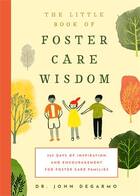
    The Little Book of Foster Care Wisdom: 365 Days of Inspiration and Encouragement for Foster Care Families
    Dr.John's TEDx Talk on Foster Care.
    Get unlimited access to over 65 hours of Training Webinars, Certificates, CEUs 15 FREE eBooks, and more.  Get your licensing foster care training hours at home, at work, at lunch, on vacation....anytime you want.    It's easy!   
    Join​ HERE!

    Archives

    October 2026
    September 2026
    August 2026
    July 2026
    May 2026
    April 2026
    March 2026
    February 2026
    December 2025
    September 2025
    July 2025
    June 2025
    March 2025
    February 2025
    September 2024
    August 2024
    July 2024
    April 2024
    February 2024
    November 2023
    August 2023
    July 2023
    June 2023
    May 2023
    March 2023
    January 2023
    December 2022
    November 2022
    September 2022
    August 2022
    July 2022
    June 2022
    May 2022
    April 2022
    March 2022
    February 2022
    January 2022
    November 2021
    October 2021
    August 2021
    July 2021
    February 2021
    January 2021
    December 2020
    November 2020
    October 2020
    June 2020
    May 2020
    March 2020
    February 2020
    January 2020
    December 2019
    November 2019
    October 2019
    September 2019
    August 2019
    June 2019
    April 2019
    March 2019
    February 2019
    January 2019
    December 2018
    November 2018
    October 2018
    August 2018
    July 2018
    June 2018
    May 2018
    April 2018
    March 2018
    January 2018
    December 2017
    November 2017
    October 2017
    September 2017
    August 2017
    July 2017
    June 2017
    May 2017
    April 2017
    March 2017
    February 2017
    January 2017
    December 2016
    November 2016
    October 2016
    September 2016
    August 2016
    July 2016
    June 2016
    May 2016
    April 2016
    March 2016
    February 2016
    January 2016
    December 2015
    November 2015
    October 2015
    September 2015
    August 2015
    July 2015
    June 2015
    May 2015
    April 2015
    March 2015
    February 2015
    January 2015
    December 2014
    November 2014
    October 2014
    September 2014
    August 2014
    July 2014
    June 2014
    May 2014
    April 2014
    March 2014
    February 2014
    January 2014
    December 2013
    November 2013
    October 2013
    September 2013
    August 2013

    Categories

    All
    Phone Number

    RSS Feed

Home       About   Media   Blog       Training/Webinars      Foster Parent Recruitment/Retention Consultant       Contact       Articles     Foster Parent Coach       Store         Radio Show/Video Series      How to be a Foster Parent    How To Be A Paid Speaker   Testimonials